
I was always more than a little fascinated by Jaisalmer; its rugged surroundings and golden hue. Every Bengali knows it as ‘Shonar Kella’ or the golden fort, and probably loves it more after Satyajit Ray’s eponymous film starring Bengal’s favourite fictional detective.
I wanted to take the majestic steam engine named ‘Fort of Jaisalmer,’ from Ramdevra, a tiny desolate village and reach Jaisalmer early in the morning to be greeted by the desert. But God had some other plans for me and we reached Jaisalmer by car from Jodhpur, a fascinating drive through the barren lands with deer and peacocks running around making the otherwise quiet journey eventful.
Our plan was to visit the famous Sam Sand Dunes at sunset because that was ‘the’ way to enjoy the beauty of a desert. ‘Sam’ village is on the edge of the Desert National Park. We took the road that would lead us to the dunes. A distance of about 45 km from Jaisalmer and we reached the exotic ‘Sam.’
No one could tell us how the name Sam got appended to a scenic but remote Rajasthani nook. Sam, actually, is a rather barren stretch of land with almost no vegetation at all and miles of miles of sand shifting away at regular intervals. We hoped for clear weather and, we got it!
We retired to a tent to rest but more often than not the slumber hours were spent watching the majestic shifting of sands .The sand shimmered under the glow of the hot and comfortable winter sun, highlighting every aspect of a desert.
The long stretches and miles of barren sand dunes kept changing colour and the shadows kept shifting every minute giving a feel that an artist was creating a masterpiece and immediately changing his mind for something else. It was just fantastic. We spent hours playing the guessing game as to which way would the wind blow  and the ripples of the wind-caressed dunes would create an enchanting mirage.
Spending some time in just watching the shifting sands, we decided to take in a camel rode too. I was a little uncomfortable with the animal and was dead sure that I would fall off from its back. But nothing so atrocious happened and the camel safely took us out about 1.5 km into the sand dunes.
Suddenly we were in the midst of -- a part of, actually -- the sandy panorama
that we had been merely admiring from afar all this while! It was a great vantage point to see patterns carved out by wind. Sam is on the sand. ‘Sam’ is truly a photographer’s delight, with its rippling dunes stretching into the blue yonder and then merging with the colours of the dusk. Evry silhouette was poetry in sand.
But we still could not ignore the mundane either despite the beauty all round -- hunger pangs beckoned! We came back to the tent, washed up with some very welcome hot water, thoughtfully kept there in a bucket. And then it was time for a pure vegetarian meal comprising sogra, a roti made from millet, simple puris, urad daal, mogri mangori (desert bean curry) and ghewar, a sinful dessert of dried urad paste, crushed, deep fried and dipped in sugar syrup).
After the hearty meal it was another round of admiring nature, the culture, the people, their way of life, and the breathtaking beauty of the surrounding desert landscape. It was late afternoon and everyone seemed to gear up for the sunset. In the meanwhile a group of folk singers had arrived in their usual gorgeous colourful ghagra-cholis, and typical local musical instruments, which were more lookalikes of dholaks and sarangis.
Once more it was proved that the language of music is universal. We all sat around them and enjoyed their songs and dance. Little boys played the music while the girls danced, with their parents and accompanying adults singing in their rustic yet beautifully natural voices. The entire atmosphere was timeless.
Ultimately it was time for the sun to bid farewell. The entire sky was set ablaze with colours. The temperature dropped perceptibly fast and I began to feel a chill. Quietly the blazing sky faded away and the big round red ball dipped below the horizon. It was a magnificent sight as the sand took on the palette of the sky and even the wind quietened down to watch the panoply.
As the sun set, millions of twinkling stars took centrestage. The show was over and everyone clapped. Yes, literally clapped. On our way back our driver suggested to return via Khuri, a small village very near Sam. We found the sandy scenery there even more beautiful than Sam but alas, not that publicised.
But we could not linger long after nightfall and so we reluctantly got back into the jeep to return to Jaisalmer.
Tuesday, July 21, 2009
Jaisalmer: A date with a desert


Bikaner fort and palaces: India, History Map tourism

The much anticipated trip to Bikaner turned out to be more than a mere holiday. It was, in the true sense, a brush with royalty. A whiff of the glorious past so permeates this small tourist spot in Rajasthan that it is impossible to not carry its fragrance on your way back.
As you step onto the station and get the feel of the city on the way to Lalgarh Palace, you begin to discern the underlying tranquillity so conspicuous by the near absence of motor vehicles and the usual din and noise. Clean, wide and unbroken roads greet you and beckon you to take a peek at the small city dotted with majestic forts and buildings in red sandstone.
The long driveway takes us into Lalgarh Palace, a part of which has been converted into heritage hotel and the rest are the private chambers of the royalty that still resides there. Behold the peacocks priding in the gardens and you instantly envision queens and princesses in flowing silk strutting past them.
The very first day sees us walk up the par apet of Junagarh Fort and into the open courtyard which was setting for the coronation of erstwhile rulers. As we moved from one room to another, crossing long, pillared, corridors, courtyards and narrow and dark stairwells, the magnificence began to overpower. The intricate carvings, the work on ceilings and walls in pure gold, the swing adorned with several dolls on both sides of its poles (the do
 lls danced when one swayed on it), the motifs from mythology and the life of kings, all reminded us of life in times past.
The Baadal Room with its musical instruments, clouds painted on a blue ceiling, and provision for sprinkling water to give the effect of rain in the parched summer months speaks of the luxury that the rulers desired and made possible. The fort displays swords, guns, knives, armour; the Maharaja's personal belongings in his office; his aircraft; palkis; costumes and more. Adjoining the fort is Prachina, the museum showcasing family silver, cutlery, crockery, shringaar knick-knacks and poshak or court dresses. The Sadul museum housed in Lalgarh Palace displays the royal lineage through innumerable photographs and Laxmi Niwas ischock full of trophies of hunts long past...
Amid all this grandeur, what leaves you absolutely mesmerised is the Lake Palace of Gajner, the hunting resort of the Maharajas. The quietude here is deafening, the hospitability unmatched, the ambience perfect for honeymooners. To top it all, we were driven to the adjoining sanctuary in a royal buggy driven by four horses, to see black bucks and dee r.
r.
The bustling marketplace is as unusual too. We were greeted with respect and offered paan. Colour, striking and splashing, is what grabbed attention. This is what imparts life to arid Rajasthan. And the language. The sweetness and dignity in 'hukum' floors you and the rustic lingo adds flavour to the food too. Gattas, saag, baajre ki roti, lal maas – there is a typical aroma to the cuisine.
Havelis – intricately carved with low doors and decorative windows - are yet another special feature. The thrill of seeing them from a tonga meandering through constricted bylanes is unmatched. Many now lie abandoned, on the verge of collapse. Suddenly in a rare open space a huge temple structure looms large: a 560-year-old Jain temple, the foundation of which was laid in tons of ghee! Intricately carved, the highest pinnacle of this temple gives a splendid view of the city.
To Raiser for a camel ride that turns out to be the most unpalatable of all adventures, not for anything else but the very nature of getting on and off the desert ship. You almost stumble off the hunchback and the ride across the dunes (not too many), leaves you drained, completely. To return to be rejuvenated at Lalgarh!
The Great Barrier Reef (GBR) is more than an undersea wonderland- it’s also great fun!!

It’s all such fun. Awesome rather, to watch the ensemble of the world’s largest nether theatre at the Great Barrier Reef (GBR) on the Australian east coast. As the earth’s largest World Heritage Area – 347,800 sqkm (or UK, Holland and Switzerland combined), GBR splices corals to form the world’s most extensive reef system. The world’s most spectacular marine park, it is home to 1500 kinds of fish, 4,000 types of molluscs, 350 varieties of echinoderms, 400 species of coral, 500 types of seaweed, 23 species of marine mammals and 1500 kinds of sponge.
I watch – transfixed – as schools of glutinous, fluorescent fish shimmy past my sub-sea viewer’s glass. Bringing up the pisces’ rear, as if in slo-mo, is an army of molluscs and echinoderms. I can spot a lone turtle too. Confused, it first waddles straight, then left and right before finally getting sucked, poor chap, into thickets of swaying emerald vegetation.
As I ruminate upon the diffident turtle’s fate, a plump, silvery snake suddenly springs out of nowhere to nuzzle my glass. Exquisite terror engulfs me. And I back off instinctively, much to the amusement of my group – journos from Singapore, Hong Kong, Philippines and Sri Lanka.
Of course the GBR has a cultural dimension too. In fact peoples’ involvement with the heritage area began long before Captain Cook struck a r eef near the current site of C o o k t o w n . Aboriginal and Torres Strait Islander communities have fished, hunted and reaped rich harvests – dugongs and turtles, for instance -- from its waters. Chinese beche-de-mer and Japanese pearl divers have also plumbed its depths in the nineteenth and early twentieth centuries. Plus, 30 shipwreck sites of historic importance are known to exist in the GBR as well as historically significant lighthouses and World War 11 sites.
No wonder the reef is a shrine for millions of tourists. Like us. We got in from Queensland – Australia’s Sunshine State – in a high-speed catamaran which ripped the ocean’s surface to transport us here. And no sooner did we disembark – all dizzy and windwhipped – that we were bundled into whirring choppers for an aerial view of the GBR. Buckled up, headphones in place, we tuned into a taped c o m m e n t a r y about the world’s largest structure made completely by living organisms.
As the chopper droned over the breathtaking beige-blue aquatic stretch, a rich baritone voice (yeah pretty much like Big B’s) informed us that the GBR isn’t a single reef but an interconnected network of over 2,900 individual reefs and 900 cays and islands. Its incredible size has spawned a remarkably diverse range of habitats and plant and animal life. In fact so huge is its expanse that habitats and species found at the southern end of the GBR are vastly different from those found in the region 2,000 km away while those existing close to the coastal region are markedly different from those offshore.
The views are spectacular indeed. And we crane our necks to take them in. As we marvel at the diverse coral shapes, a collective sigh escapes us as we get to `Heart Reef’ – a spectacular formation of reefs in the shape of a heart! It’s a popular haunt for honeymooners, we’re told.
Corals, continues Mr. Big-B, are created by the marine polyp – a primitive animal related closely to anemones and jellyfish – which forms a hard surface by producing lime. As polyps die their `coral skeletons’ remain to gradually form the reef. New polyps then grow on these skeletons, continually contributing to the reef. The GBR is, therefore, a living network of billions upon billions of marine polyps which have been developing for over 10,000 years!
The fascinating chopper ride over, we get back to the catamaran for a delicious lunch. A sea food salad crafted out of the day’s rich pickings from the ocean – oysters, crabs, lobsters, squids – drizzled with lemon juice, oven fresh bread and duck parcels. All is washed down with a chilled chardonnay.
Well-fuelled, I now head to the docks to feast on the scenery -- rugged mountains, the green-blue ocean and cloud-dappled skies. A little distance, I can spot gaggles of tourists clambering into choppers for rides just like we had a while
back. Some are busy strapping scuba diving gear to go snorkelling. A little stretch down the beach, there’s provision for high-speed boating, whale-watching, parasailing, kayaking... If you’re averse to getting water-coated, like me, then you can plump for subsea viewers to watch marine life from behind a glass.
Another increasingly popular attraction at the Reef – though a tad expensive at Aus $ 350 per person -- is Reefsleeep’, a two-day sleepover aboard a luxury ship which lets you watch the Reef metamorphose from a sky blue stretch to a translucent blueblack one aglow with corals and marine creatures at night! And after you’ve had your fill of snorkelling/scuba diving/swimming with a personal guide, you’re treated to bubbly and an alfresco meal under a star-lit sky on board!
With such sybaritic offerings, tourism at the GBR, together with commercial fisheries, is of major economic importance to the region. But, unfortunately, along with a spurt in tourism, there’s been a corresponding southward spiral in the Reef’s ecology too. Much of its marine life – especially five kinds of indigenous turtles and dugongs -- are reacting unfavourably to human interference and waste flowing in from the islands.
Corals apparently haven’t taken too well to this development either. They are sensitive creatures and, as the onboard marine biologist Susan Baker informs us, grow only in water that’s clear, briny, has a temperature of 17.5 degrees centigrade and is less than 30 metres deep. To preserve these conditions, the Reef is classified as a `Marine Park’, a concept based on the synergy between the area’s conservation and its appropriate use by fishermen, collectors, charter operators, tourists and scientists.
Precisely for this reason, aerial surveillance in the area – especially of fishing vehicles – is restricted too. No wonder, placards exhorting divers and tourists not to harm the corals liberally dotting the area.
Meanwhile, the guys in our group have stripped down to their innerwear…And are all set for parasailing, their multi-hued vehicles with enormous wingspans waiting by their sides. They cheer us– me and my Singaporean counterpart – to join in the fun. But we decline, preferring instead to spectate on a three-tiered human drama unfolding before our eyes ---underwater, on terra firma and the azure canvas above!
Teotihuacan our (Mexico) city of ancient Mayan pyramids history culture

This is the only city, where you arrive to the sound of brass bands...The lilt and beat is unmistakable: it has to be Mexico! This is a city that believes in giving you a first hand introduction to its cultural heritage, right from the moment you land.
Beginning with the musical welcome at the airport, to the hotel where I chose to stay, the entire 2-day visit was like a blur of colour. It was my first occasion to stay in a room with daring purple walls and pink cushions and after the first initial shock, I had to admit it was fun and rather uplifting.
I set out in the afternoon to visit the UNESCO World Heritage site of Teotihuacan, the city of ancient Mayan pyramids, 30 miles away, a two hour drive was what I was told. After fortifying myself with an enormous cheese and avocado sandwich, bought from a roadside vendor (much to the disgust of my gum-chewing cab driver Manuel), we drove south.
The countryside was a great deal like India, the road surface indifferent, and plenty of grinning grubby children ready to crowd around whenever we stopped. Obviously there were very few Indians (of our subcontinent, that is!) on these roads and my saree and bindi were enough cause for merriment.
Intrigued by upturned terra-cotta pots on the roofs of a large number of houses, I stopped to ask the reason. I was told that it keeps the houses cool in the hottest weather, especially if one sprays some water on the pots. Some part sof India resort to the same measure so there may just be a connecton there! Most of the house were painted white but it is apparent that everyone is not well off in Mexico. Along with some rather bushy looking trees, there were the cactuses spread all over.
We reached the Mayan Pyramids at 3 pm. Teotihuacan or The Place Where Gods Were Made, is one of the world's most awesome ancient sites. Teotihuacan, is said to have dominated central Mexico for a thousand years, and then was mysteriously abandoned in about 650AD. Its Temple of the Sun is the said to be one of the largest pyramids in the world and the largest in what is described in Mexico parlance as the 'New World'.
The 7 sq mile site includes 75  temples, 2000 residences and 600 workshops. There are palaces of various sizes and there is still much to see unlike the Mohenjodaro and Harappa sites closer to us.
Teotihuacán was a large settlement by 150BC, its importance probably arising from a cave system with religious significance, located underneath the present day Pyramid of the Sun. As other settlements declined, Teotihuacán flourished and became a religious and economic center, controlling the region’s production of obsidian (the black stone used to make weapons and utensils).
Interestingly, there are no depictions of warfare or human sacrifice in the carvings and murals at Teotihuacán, unlike many contemporary cities in Mexico.
As I drove up, even though it was afternoon, there was a sort of mist haze and Teotihuacan's pyramids and palaces seemed to rise up like ancient mysteries being born anew. It was too large an area for me to visit in totality on foot. Manuel had warned me that the sun gets very hot and I should get myself a straw hat.
He was a bit taken aback when I just covered my head with my pallu. But he was right, it was hot and I managed to take my photos and see as much as possible in the hour and a half that I had allowed myself. The shops were inviting me with their Coca Cola hoardings, and it was a relief to sit down for a while and just look at the magnificence of this ancient site.
Before heading back to the hotel, I allowed Manuel to take me to a crafts entre. The one I visited was created in the Pueblo style with mud walls. Manuel called one of shop assistants to explain how tequila is made, and then for a whirlwind tour of the workshop, with its multiple looms for rugs and blankets. There were also a whole range of ponchos on sale, something that I simply could not resist. The silverware on sale was also special and I found myself buying a bangle carved with bulls and matadors.
Teotitlan is Mexico's most famous weaving village and I was told that after trying out synthetic dyes, the weavers have gone back to natural colours derived from insects, plants and seashells. The designs are also similar to what one sees in durries in India - the affinity with India is strong. Maybe it’s all Maya after all!
Monday, July 20, 2009
Pompeii: a trip to Pompeii history pictures visit volcano map destruction
 The world's oldest brothel is here. It's been here for over 2000 years. Which gives it a double distinction, if you think of the fact that prostitution is the world's oldest profession. How many lawyers' offices do you know that have been around for 2000 years?
In the past 10 years alone, over a 100 million people have visited this brothel. If you calculate at the rate of 10 million visitors a year, by all accounts that's a conservative guess. The visitors are both men and women. And most of them leave open mouthed. That makes 10 million erotic thoughts. Whew!
It’s no ordinary brothel, this. It has ten rooms, five of which were on the first floor, reached by a small stairway, now barricaded. Each small room has a stone bed, stone bolster and wooden door. The walls are decorated with unashamedly erotic scenes, depicting the services offered by prostitutes and servants. Although the passage of time has dimmed the original colours, you can still decipher them visually. Astonishing.
As soon as my own erotic wanderings have subsided. Astonishing as everything in Pompeii is. It is believed that there were altogether 25 such brothels. This one, on the appropriately named Vicolo del Lupanare (Brothel Lane) is the only one that still exists. And the only business it conducts is the knowledge it offers. That sex was considered a necessity. Celebration. Enjoyment. The good life and more.
Everything I see in Pompeii points to this. What is even more surprising is how cleverly the archaeological uncovering of this buried city has been carried out. And the most astonishing thing for me is what a large and highly evolved town Pompeii was. After walking its paved streets for over five hours, my feet have covered only one fourth of the city.
Pompeii lay covered for nearly 2 millennia. Covered by the dust and debris of centuries, under a thick carpet of ash. On 24 August AD 79, the eruption of Mount Vesuvius destroyed both Pompeii and Herculaneum. The latter was submerged under layers of molten lava and mud, which explains why it was found better preserved than the former when both sites were rediscovered in the 18th century.
To discover Pompeii in this century we have driven from our home in Naples. The route is slightly inland, over roads that run parallel to the coastline. In 45 minutes we have arrived just outside the ruins of Pompeii. A short walk brings us to the ticket counters for this UNESCO World Heritage site. A nattily dressed man is going through the queues, exhorting visitors to use his immaculate services as an English-speaking guide. He finds only a few takers. 20,000 Lire per person for being guided, in addition to the 40,000 Lire entrance fee is not peanuts.
Although my hosts Cynthia and Clyde have visited Pompeii over ten years ago, it is as if we are all discovering it together .We are struck by the same irony when we look at the impressions of bodies made and kept here in certain homes. The ash which suffocated the inhabitants of Pompeii in their desperate att empts to escape, (or the equally vain attempt to take refuge in the innermost parts of the buildings) has paradoxically preserved at least part of the life of this great city for us voyeurs.
Protected by walls some 3 km long, this was a prosperous city, vital, bustling with pedestrians and traffic, and full of hotels, inns, shops, grandiose public buildings, temples and private homes. Painted walls were an essential element of decoration. Fantasy, illusion and mythological motifs prevailed, accompanied by rich decoration. Preserved walls in the Villa of Mysteries, the Vettius House and the Orchard House are stunning examples of this. Also of great importance was sculpture, apparent from works of great value and beauty that came to light during the excavations.
Private homes were of two types – pre-Samnite and Italic – built around a central atrium. On top, a four-pitched roof sloped towards the interior. A central opening in the roof provided light and a supply of rainwater, collected in a tank below which was connected to a cistern. So there was never a water shortage. Just looking at this makes me wonder. Why is it that our 21st century officials can't learn from ancient civilizations?
Pompeii, a city caught in a time warp is teaching us a lot of lessons. The most telling one is that it makes me realise how little mankind has really advanced. Maybe we do deserve to be ruled by the idiot box.
Friday, June 05, 2009
Marble Rocks of Jabalpur in Madhya Pradesh, magnificient

Think of beauty immortalized in marble. The first picture that springs to your mind is probably that of the Taj Mahal of Agra. Instead think of a more natural setting where Nature has liberally used marble to create a captivating environ. It is Nature’s creativity unleashed over a river. The Marble Rocks of Jabalpur in Madhya Pradesh epitomizes a natural splendor that leaves you breathless and awed by its sheer grandeur. Even the legendary Raj Kapoor was mesmerized by this locale and he used it to ample advantage in one of his acclaimed movies.
We had come to Jabalpur, a city girdled on all sides by low-lying hills, to visit friends. On arrival we were surprised to see the still unmistakable impact that the British had left on the city. The leafy cantonment area, barracks and high roofed imposing residences were all quite reminiscent of the colonial times. After a day of catching up on all the news and refreshing old memories, our hosts suggested that they take us the next evening to visit Jabalpur’s famed Marble Rocks. They disclosed, that the rocks are not like the Makrana marble used in the Taj but a much softer version of the limestone deposits that result in marble from metamorphosis. This little fact did little to dampen our enthusiasm for the celebrated 'Marble Rocks' that rise on the either side of the holy river Narmada.
Our fascinating marble excursion actually began in the late afternoon. We first reached Bhedaghat, which is about 23 km from Jabalpur. The place apparently gets its name from the entire stretch of rocks, which from a distance resembles grazing ‘bhed’ or sheep. Bhedaghat, the town is actually quite small and quiet except for the continuous chiseling sounds made by the artisans carving the local marble and limestone into intricate and beautiful artifacts. Much as we were tempted to buy these, our friends advised us to postpone our purchases till the end of our trip, as these artifacts are quite fragile.
The flowing Narmada River bordering the rocks makes for a very charming sight. Most of the rocks have interesting names based on what they appear to look like. As kids we would look often look at the clouds in the sky and try to delineate shapes. Here too we found the tourist guide pointing to different rocks and spouting names of animals with stories et al. Some of the animal shapes we identified were those that resembled a deer and a cow. The shadows of the rocks are reflected in the waters of the river. There is a local legend that the monkey God of Hanuman actually set foot on one of these rocks on the way to Lanka. It is said that on a moonlit night the rocks dazzle in the celestial illumination. We were hard put to keep up with the prolific description of shapes our guide was telling us about with enthusiasm. All our imagination was put to good use as we tried conjuring up images in the rocks.
We next headed towards the Waterfall portion of the river. The beautiful Narmada River after winding its way through the Marble Rocks, narrows down and rushes forth with some force into a waterfall, several meters in height. Here the river forgets for a while its placid tunes and instead of flowing quietly makes its way forward with unbridled abandon. Dubbed "Dhuandhar", from the smoke-like mist that arises from the plunging waters, these natural waterfalls generate a roar that can be heard from quite a distance. The Dhuandhar Falls, showcasing the power of the cascading Narmada River turned out to be a truly unforgettable sight.
Experiencing the beauty of the marble rocks and the Dhuandhar Falls had left us wanting to see more of this marble marvel. The highlight of our trip therefore for us was the time we spent just boating along the Narmada. Our friends had told us that on weekends and on full moon nights the place was packed with tourists, as the marble appears even more stunning in the moonlight. For us though the scene even in daylight had us riveted. However on the insistence of our friends we decided that the expedition would be deemed incomplete without a moonlight jaunt on the river. As our boat began to glide over the river waters, we discovered that the Narmada River valley is the only place in the world where the river is dammed on both sides by marble rocks.
The sight of the marble cliffs rising on either side of the river was almost ethereal in beauty, with the last rays of sunshine flickering over the white cliffs rendering them with a unique glow. As our boat went forward, moving almost effortlessly due to the pace of the flowing river, we were awestruck. The rocks soared to a height of almost a hundred feet on either side of us. We were all lulled into a very pleasant feeling akin to being on another planet.
Our silence was broken only by our involuntary exclamations of marvel at the splendor of the creamy white marble. Adding to its beauty the cliffs appeared to be underlined in places by green and black volcanic rock. Suddenly to our surprise the river narrowed down. This stretch of the river is popularly known as Bandarkudni, a literal translation of the fact that the river here narrows down to an ex tent that even a monkey can jump easily from one bank to the other.
Having seen the Marble Rocks in all their hues, tints, and moods, we were left wondering why we had not visited this place earlier. Captain J. Forsyth summed up the beauty and tranquility of the marble rock experience of Jabalpur best when he described it in the his Highlands of Central India: - “The eye never wearies of the ....effect produced by the broken and reflected sunlight now glancing from a pinnacle of snow-white marble reared against the deep blue of the sky as from a point of silver, touching here and there with bright lights the pominences of the middle heights and again losing itself in the soft bluish greys of their recesses..."
The boat ride over the beautiful Narmada River, the rays of the golden sun bouncing off the white rocks, and the gushing falls – The marble rocks of Jabalpur are inde ed a geological wonder.
Thursday, June 04, 2009
Pench National Park: An experience with panther
Walking open fields we pass majestic mahua trees laden with buds which will soon open up into the succulent flowers so loved by bears. Once the flowers drop, the bears from the nearby forest will gorge themselves on these sweet fleshy fermenting petals and get drunk. They are at the most dangerous then. Fortunately, we see no bears as we enter the dry,
winding river bed that flanks the forest.
We’re at the Bagh Van camp, at the very edge of the jungle at Pench, Madhya Pradesh, escaping from the dust, pollution and noise of urban life. Pench, 92 km from Nagpur, is a National Park opened to visitors a little over 2 years ago, and as a result unspoilt and unsullied by hordes of plastic littering city dwellers.
As we walk along the stream bed in a dark tunnel created by overhanging trees, I am conscious that tigers, panthers and other game walk on this same sandy soil after dark to get to the pool of water further on. I reassure myself that it is still another hour to sunset!
Entry into the forest is banned, but we cross over to a path along the periphery, past Teak, Saaja, Mahua, and Flame of the Forest trees. Young Garari trees line the path with their end of season leaves hanging like golden discs. This is early March and there is gold on the trees which have begun shedding their leaves to welcome spring with their fresh green offerings. We walk on a carpet of brown and amber and as we crunch the leaves underfoot, the slanting rays of the setting sun add their gold to the forest. The fragrance of
mango blossoms scents the air.
We startle a herd of chital who gracefully lope away into the trees. The air is still except for birdsong. I feel I have begun to live again. On our way back, as we approach the village, we hear cow bells and stand aside as a herd of cattle slowly make their way back in the mellow light of the dying sun.
It is dark now, but the half moon silvers the top of the forest trees as we sit by the campfire. The black forest broods around us. Suddenly we hear the alarm call of the sambhar across the dry river bed. It is repeated and then begins to come closer. The next call appears to come from the bushes just across us. The camp naturalist, grabs a flashlight and runs towards the river bed. I grab another one and run after him.
As we climb down the bank to the river bed, he whispers that a tiger or panther mu
We wait in the dim moonlight, for any further sound. But, there is nothing more. The dark forest is eerily silent. I seem to feel the presence of something close by, my skin tingles, but I put it down to my over heated imagination. We finally make our way back to the security of the camp, and as we climb the river bank, I guiltily feel a sense of relief. A close encounter in a forest at night is wonderful to think about in retrospect, but at that time, fear is just a heartbeat away.
How close we were, became evident the next morning. The naturalist identified the fresh panther tracks very near where we had been standing. Whether they were made just before we
reached, or after we left, was not clear. If after, then the panther was but a few yards away as we stood on the river bank and, and waited for us to leave before going to the pool to drink. If before, then she (the naturalist felt it was a female) had finished drinking and hidden in the shrubs. Either way, she had not been far away, since the sambhar continued calling after we reached the spot.
The next evening we walk along a different route. As we reach the forest boundary, we hear chital alarm calls, which are very different from the honk of the sambhar the night before. But they are some distance away and we return to the camp in the gathering darkness. We barely sit down to a hot cup of tea when we hear the alarm call repeated – only much nearer now, coming from the forest on our right. The alarm call continues intermittently as I go back to our cottage to change into a long sleeved shirt against the evening chill.
By the time I return, the a l a r m calls have become more frequent and are moving from right to left in the forest across the river bed. I find to my disappointment that the naturalist has already gone down to the river bed accompanied by one of the camp staff. I grab a flashlight and go down to the edge of the river in the hope of being able to spot what is happening. I do not have the courage to go down on my own, and so miss the drama.
The naturalist and his companion return a little later – beaming. They had crept down the river bed to another pool, this time on the left of the camp, and stopped because they could smell a panther (those living in the forest apparently develop this sense of smell). Suddenly they saw a shape near the pool, but it melted into the darkness of the forest before they could use the flashlight.
The youngster accompanying the naturalist, a local familiar with wildlife, was very keen to go into the forest after it. But wiser counsel prevailed. If the panther had cubs with her, then following it could be hazardous. The next morning, tracks by the pool again confirmed a medium sized panther's presence.
The alarm calls continue for a little while after their return, but stop eventually. As we sit around the campfire with drinks, the talk is about other tiger and panther sightings close to the camp. It’s a moonlit night, but every rustle from the dark bushes around us seems pregnant with menace. Periodically we sweep the trees with a flashlight, because panthers are known to climb trees.
As we move inside for dinner, Wriggly slinks in and creeps under the table. This is totally unlike the spirited little pup who normally cannot be persuaded to come in. After dinner, on the way down the path to our cottage, only a few yards from the river bed, I again have the sense of discomfort I’d felt the day before.
Sweeping the flashlight over the adjoining bushes reveals nothing. But the eerie sense continues through out the night, and I keep waking up at the slightest sound outside. Is it my newly awakened sixth sense at work, sensing the presence of a predator? I’ll never know. But panthers have been known to hang around waiting to pounce on dogs.
I was reassured to see Wriggly safe and in good spirits the next morning. During the next couple of nights, Wriggly does not repeat the other night's behaviour, nor do I again have that creepy feeling. So maybe there had been something there that night... Who knows? The forest keeps its secrets.
All too soon, it was time to go back. The week had been enchanting and we felt restored in body and mind. We knew we would be back.
Image: India Wildlife

Tuesday, September 16, 2008
Marine Aquarium Fishy Assets
Before you turn your nose up at the idea of aquarium fish as a status symbol, let’s clarify that we aren’t talking about the ubiquitous goldfish bowl. The latest indication of a healthy bank balance is a well-maintained marine aquarium, with its own anemone, clown fish (made popular by the film, Finding Nemo) and more exotic species like the scorpion fish, the Moorish idol or the Picasso triggerfish. Marine fish are several times more colourful and eye-arresting than their freshwater counterparts and come at a heftier price tag. Also, remember that many of these species are endangered and buying them without proper documentation could result in a large chunk of your bonus being spent on bailing yourself out of prison.

A Ferritti Yacht Ride Seas
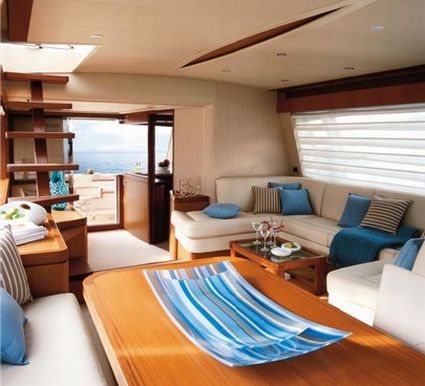
It’s a dream, but imagine if your boss rewarded you with his American Express black card, what are your options? If you are sea-worthy and get very lucky (there is a long waiting), you could opt for one of the sexy 44 ft Italian Ferritti yachts and sail off into the Mediterranean seas. You could book for it in India too. Of course if your conscience does not pinch you and you are a huge Robbie Williams fan, you could get lured into one of the high-end Riva (Williams yacht cost him US$ 14.4 million) yachts or settle for the Ferritis, which range from Rs 4 crore to Rs 25 crore apiece. If you don’t want to take our word for it, try what Italian conductor Riccardo Muti said of his Ferritti 57 (it cost him approximately Rs 16 crores), “Its elegance and efficiency was just like an orchestra, which can be recognised on the radio.” Also, you enter the exclusive lifestyle of the Riva club and rub shoulders with other Ferritti yacht aficionados like the Shah of Iran, Prince Rainier of Monaco among others.
Aracde Gaming Down Memory Lane

Segway Human Transporter rule the roads

Japanese prime minister Junichiro Koizumi loves it, George Bush fell off while riding one and recently, the US Commercial Consul in Mumbai challenged Bollywood actor John Abraham to a race on it. The threeyear-old Segway Human Transporter is finally hitting the popularity charts even outside US. It was a big hit at the World Expo 2006 in Japan and from what we hear, the Segway HT is all set to make its debut in India soon. It’s good to own one — not just because it’s a nice toy to flaunt but Segways can make life easy in our congested city roads.
Golf Travel: Ryder Cup 2008


Monday, September 15, 2008
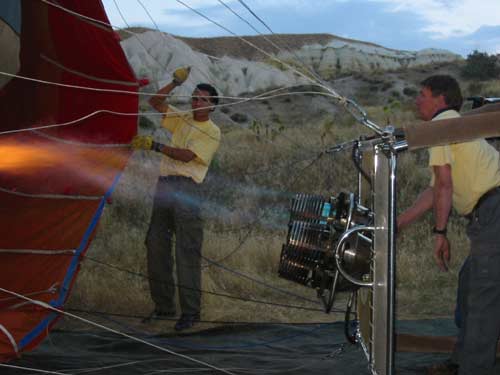
Hot air ballooning in Turkey: A whole new world

Heli Skiing in the Himalayas for the brave at hearts
Spa Therapy Stress Buster
One of the closest synonyms for luxury is a spa experience. Of course, when we say spa, we are talking of choosing one of the island resorts in the Maldives, like the Taj Exotica or the Six Senses, where you could probably land in your private jet, surrounded by the clear water of the coral reefs around you and the expanse of the ocean spread before you. You have an array of massages — Balinese, Thai, Hot Stone, ayurveda or aroma or one of the more exotic treatments as well. Choose the mat on the white sands and let the soothing sounds of the ocean drive your stress away.

Saturday, August 02, 2008
Orchha: Legends in the wind

Every stone in Orchha whispers tales of times gone by. We got wind of some of them as we explored the ancient city by the banks of the Betwa
ORCHHA reminded us of a princess who had managed to age gracefully. The little riverside town, 125 km south of Gwalior in Madhya Pradesh, was studded with monuments, grand and small, that showed the scars of time. Over the next two days Orchha would take us into her embrace and share with us her past: of a time when she was young and beautiful; when kings and emperors fought over her and adorned her with grand monuments that sparkled like precious gems. And she would whisper to us the secrets she had been privy to.
Indeed, Orchha appears to exist in a fairytale dimension, almost divorced from the rest of the country. There was a time when the 2 sq km town had been virtually swallowed up by the surrounding forest till it was rediscovered as a tourist spot. And she seems to revel in this new role, repeating the story of her life to each visitor who stops by her doorstep.
One of her favourite tales is about Rani Kunwar who had travelled far to seek Lord Ram's darshan. One day the Lord appeared to her in the form of an idol but cautioned that his final resting place would be the place where she first put him down. Immediately she set off to return to Orchha, a journey which in those days took eight months, even as her doting husband, King Madhukar Shah, commenced work on the temple in which Lord Ram was to be enshrined.
However, the construction took longer than anticipated and Rani Kunwar was obliged to keep Lord Ram in her bedroom. When it was time to shift the deity to the newly constructed Chaturbhuj Temple, the idol refused to budge no matter how many hands tried to lift it. And so it remained where it was in a small room of the palace which was then converted into the Ram Raja Temple. (The towering Chaturbhuj Temple in the adjoining compound stands empty and forlorn, seeming to wait for a divine guest who will never arrive)
Even today the palatial Ram Raja Temple is the bustling hub of Orchha and what is really unusual is that it is the only place in the country where Lord Ram is worshipped as a king and not as an avatar of Vishnu. That aside Lord Ram is a nocturnal visitor for here they believe that he resides in Ayodhya by day and sleeps in Orchha at night. Hence the temple remains closed throughout the day and the heavy silver doors of the sanctum are flung open only at 7 p.m. for the evening aarti.
We arrived just as an armed sentry opened the door with a flourish and the priest started the aarti with practised ease. The air was thick with devotion and the small knot of people started to sway and sing, moving to an inner rhythm and an almost divine frequency.
Another favourite tale of Orchha revolves around the Rai Praveen Mahal, a petite twostoried structure which blends seamlessly with the surroundings dedicated to Rai Praveen, the beautiful paramour of Raja Indramani (1672-76). The story oft told is that when Emperor Akbar heard about her legendary beauty, he summoned her to Delhi. And so the lovely damsel went to the Mughal court but once there, she conveyed her dilemma in verse which implied, who but a dog or a crow eats another's leftovers? The emperor got the message and let her return to her king – untouched.
The Jehangir Mahal is another relic of the Mughals in Orchha. The imposing palace, crowned by graceful chhatries, was built by Raja Bir Singh Deo in the 17th century to commemorate the visit of Emperor Jehangir to Orchha. And once the royal guest had departed, the palace remained unoccupied, languishing under the hot Indian sun like a jilted lover. We strolled through the monument that loomed above us, its balconies, grilled windows and stone elephants exuding a sense of sullen grace.
FACT FILE
Gwalior, 124 km, is the nearest airport.
Jhansi, 16 km, is the nearest railhead.
Pre-paid autos charge around Rs 150 for the 40 minute ride from Jhansi to Orchha. ST buses are also available.
Madhya Pradesh Tourism Development Corporation runs two hotels in Orchha: Betwa Cottages and Sheesh Mahal Palace Hotel. There is also the red sandstone and marble Orchha Resort CARELESS WHISPERS
RAJ MAHAL which stands across a yawning courtyard is equally imposing but less elaborate in its design. However, the palace that saw a succession of kings and queens preside over Orchha was the heartbeat of the little kingdom: and a hotbed of political intrigue, unbridled ambition, treachery, lust and love. The plain façade of the monument contrasts with the rich murals within… of Krishna and his gopis; kings and commoners. We wandered through zenanas that seemed to vibrate with the memories of gorgeously clad princesses blushing into their silks even as long-widowed aunts firmed up their marriages to distant princelings.
Leaving behind this world of nautch girls, pampered concubines and bejewelled potentates, we set off to explore the 14 cenotaphs of the rulers of Orchha, wrapped in an almost haunting quietude as they contemplated their reflections in the twisting Betwa river.
Sprawled out on the far bank is the Orchha wildlife sanctuary which once bristled with animals, including tigers, for the hunting pleasure of the king and his royal entourage. Today the sanctuary is stripped of its tigers and sadly most other game and all we came upon was a nilgai and her calf when we embarked on a safari that had all the trappings of a jungle book adventure.
That evening we strolled down to the Laxminarayan Temple on the outskirts of the town and admired its colourful murals focusing on both religious and secular subjects. As the sun slid off the sky, we stood on the balcony of the temple that commanded a bird's eye view of ancient monuments scattered across Orchha, and stories we had heard earlier in the day returned to haunt us… Of how a ghoulish hand, presumed to belong to the spirit of a two-timing dancing girl, appeared out of nowhere and wrapped itself around the throat of a chowkidar; of reed-thin rishis living in a nearby forest; and of star-crossed royal. By Jeru Irani
Wednesday, June 04, 2008
spectacular Alpine scenery of Switzerland
The scent of alpine flowers and spicy herbs rents the air and the faint ting-a-ling of cow bells accompanies hikers from alp to alp. Hey, I'm in Switzerland, whose charming landscapes have enough zing to pep up the most jaded traveler.
My husband and I had set off for Switzerland last autumn with four friends in tow. The country is absolutely stunning in autumn, we had heard, with the skies a clear blue on most days. The summer crowds recede and the prices are considerably lower.
And so it was. Brilliant hues of red and yellow blurred past us as our train sped from Geneva airport to Interlaken - the first stop on the itinerary. The trees had donned the rich colours of the season and were resplendent in burnished shades.
Interlaken is perfectly positioned as the gateway into the Bernese Oberland. It's a pleasant enough place, even though it is bustling and commercial and packed with Swiss-kitsch souvenir shops. The town is situatedbetween the lakes Thun and Brienz and is famed for its superb views of the Jungfrau massif.
Interestingly, many of the shops that cram the town centre have signs in Japanese- an indication of the large number of tourists fromthe Land of the Rising Sun. But I think signs in Indian languages won't be too far off given the rising number of Indian tourists!
Indian cuisine seems to find favour with the Swiss,for we located an Indian restaurant in Interlaken. Setup six years ago, Spice India has a loyal localclientele - we found that out when we went to dine there. After a hearty meal of fish tikka, seekh kebab and tandoori chicken, we were ready to tackle Jungfraujoch the next day.
At an altitude of 3,454 m, Jungfraujoch is Europe's highest railway station. The journey involved trainchanges at Lauterbrunnen, Wengen and Kleine Scheidegg.
We changed trains so often that a German phraseconstantly announced on the public address system in a singsong voice before an approaching station - Nachsthalt or next stop - will always be imprinted on my mind.
After spending a few moments on the Sphinx observationterrace - a great place for taking photographs, wemade a beeline for the snows of Jungfrau plateau. The walking trail was quite crowded and a number ofpeople had brought along their dogs. We spotted a massive but benign looking Newfoundland and decidednot to pass up this photo-op. The dog obliged happily enough. A passer-by jokingly suggested to the owner that he should charge us for the snaps.
The trek proved quite arduous and a friend dropped outafter a while. I followed next. The other members of our group were in better shape evidently and completedthe trail without much fuss.
The ice palace at Jungfraujoch is an amusing novelty and worth visiting - especially since it's free to Jungfraubahn passengers. The ice sculptures include vaulted rooms, birds, animals, penguins, people, cars, furniture and even a bar.
Zurich, Switzerland's most populous canton and the country's financial capital, was our next destination. I had earlier read on the Internet about a Durga puja being celebrated in Zurich and, as it was MahaAshthami, we decided to troop down to the puja venue. The venue turned out to be a restaurant owned by an enterprising Bengali businessman. It was time for pushpanjali when we arrived, and so we were quickly ushered in for the puja.
There was a decent turnout and people had come from as far as Brussels andCologne to take part in the festivities. The idol had been shipped from Kumortuli in Kolkata, and the priest had also been flown in from there. Evenings were devoted to song, dance and sitar recitals.
Care hadbeen takento replicate Kolkata's puja atmosphere and we left after feasting on the prasad - sumptuous khichri, puris, vegetable curry, chut ney, papad and sweets. A quick trip to Lake Zurich and more photographs - especially in front of the Ganymede sculpture - followed.
Then, it was time for some 'retail therapy' at Bahnhofstrasse - the Swiss version of the Fifh Av enue that is home to some of the country's finest stores and largest banks. Dawdle in front of wellexecuted shop windows, enjoy a coffee at Sprungli, watch the world go by, and, of course, shop to your heart's content. The Bahnhofstrasse has long had the reputation of being one of the world's premier shopping venues.
If you are well armed with Swiss francs or a creditcard, then these shops may interest you: Bucherer -Switzerland's largest retailer of watches, clocks, and jewellery, Jelmoli - the largest and oldest department store in Zürich, and Bally, which stocks fabulous footwear and clothing for big spenders of all ages.
It was back to the mountains with an outing toSchilthorn the next day. From Interlaken, we took atrain to Lauterbrunnen and then the funicular to Grutschalp. Finally, we hopped on to another train for the idyllic and car-free hamlet of Murren. Perched on a high, sunny terrace facing the Eiger,Monch and Jungfrau, the village is the highestaltitude ski resort in the Bernese Oberland. There isan extensive choice of lodging to suit all tastes.
From Murren, we had a nail-biting 30-minute cable carride to the summit at Schilthorn, towering at an altitude of 2,970 m.The mountain summit became famous when the 1969 James Bond movie On Her Majesty's Secret Service was filmed there.
The Piz Gloria revolving restaurant atthe summit has glorious mountain views. The peoplerunning it are not reluctant to cash in on the 007 connection, showing highlights of the film and selling a variety of souvenirs. The restaurant, surprisingly, stocks rice and dal, which is what wehad for lunch. A lot of Indian tourists must be comingto the place, as I found a set of instructions written in Hindi — in the bathrooms.
The last day of our trip was spent in Geneva. There was not much time on hand, but we did squeeze in atrip to the Jet d'Eau, the world's tallest fountain,on Lake Geneva. We dined on couscous at a Lebanese restaurant before heading back to the airport.
- Mysterious moors, rushing waterfalls cascading downthe mountains, jagged rock formations and lush alpine meadows covered with flowers that never fail to enchant. The trip had given us a chance to marvel atthe simple things in life.
- Every moment spent in Switzerland had been worth it

Monday, April 07, 2008
Bagan: Myanmar city with 4 million Pagodas
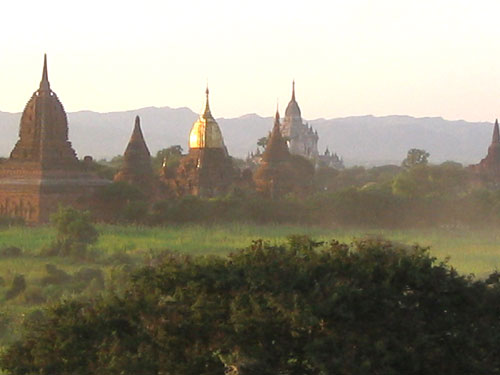
Bagan, a historic capital of Myanmar, known as the City of 4 Million Pagodas, is the richest archaeological site in Asia. It is in Bagan that Buddhism struck deep roots, and art and architecture attained peaks of achievement. Located some 300 miles from Yangon, Bagan stands on the east bank of the Ayeyawaddy, commanding the central plain of Myanmar in a setting which includes the great river flowing north to south and a network of paths and tracks. There are sandstone hills, an abundance of sand and river shingle, and a firm soil of stable bearing capacity. Bagan's climate is tropical and is generally hot and dry throughout the year. Winter time is ideal to visit as from November to February, day temperatures hover round 30°C and falls to 10°C at night. Rain is heavy and frequent between June and October. Its early history is unclear although chronicles relate that Bagan was formed from 19 villages. The most outstanding figure in its history is Anawrahta (1044-1077) who unified the country politically and culturally. He brought back to Bagan the Pali scriptures of Theravada Buddhism and set about building the awe-inspiring pagodas and temples which we still see today. His successors upheld this tradition for more than 290 years, covering an area of 16 sq miles with religious structures which number 2,217 in a recent list of the Department of Archaeology. Bagan's inscriptions mention congregation halls, ordination halls, libraries, monasteries and others, generally of timber or brick, occasionally of sandstone.
Sunday, January 20, 2008
New Zealand wine- vintage charm n’ zeal
If you are going all the way to New Zealand, then there's something you must do - taste some wine. New Zealand is not just a Rugby Union nation or a country of sheep or a bungy jumping destination, it's a great place for wines.
The wine industry has made rapid progress in a very short time. Vineyards spring up in New Zealand almost every week, just like fast food shops elsewhere in the world.
Why this affair with wine, one might wonder. Its climate, geography and the passion of the people combine to produce some premium quality wines which are 'the riches of a clean, green land'. Says Stonyridge Vineyard proprietor Stephen White, “The maritime climate, with its low summer rainfall, long hours of sunshine, sea breeze,and also the type of soil that help in producing some of the best wines. Besides, the long, slow ripening period also helps in retaining the vibrant flavours.” He should know as his flagship wine -- the Bordeaux-style Stonyridge Larose - is considered one of the finest reds in New Zealand.
The subtle variation in weather conditions and contrasting landscapes - from native bush to snow-capped mountains and bright coastline - help in producing different varieties of wine, some of which are regional specialities.
On Waiheke Island in the north, for instance, the stony soil and the hot sun are just perfect for Cabernet Sauvignon, Merlot and Cabernet Franc. Waiheke is famous for its reds and the wines of this region are pretty high up on the connoisseurs' list.
Chardonnay is New Zealand's most widely planted variety and Gisborne is known as the chardonnay capital. Hawke's Bay produces some great Cabernet Sauvignon, Merlot and Malbec. Marlborough is considered Sauvignon Blanc country, while Central Otago is famous for its exciting Pinot Noir.
With such an amazing variety on offer, wine tourism is a rage in the country. Visitors get a feel of the vineyards, interact with the workers, and soak in the aroma. Annual wine and food festivals are also held to spread the culture, and most wineries invite you for a tasting.
Many of the larger vineyards run restaurants and cafes as part of their business, where you can pick up the wine of your choice. The Kiwis are passionate about their wines, and they are bagging internationalawards. What started off as a cottage industry is now a global success story. It's pure vintage stuff.
Petra in Jordan-- a note

Carved into rock and protected by rugged mountains and a 200 metre deep gorge is the ancient ‘rose-red’ city of Petra near the town of Wadi Musa (valley of Moses), 180 miles south of Amman in Jordan. Over 2,000 years ago, nomadic Arab tribes called the Nabateans established Petra as their fortress-capital, that controlled the trade route from India to Rome. Fromthe taxes they earned, they built an amazing city of monumental tombs, carved temples, amphitheaters, gateways and water channels and decorative buildings from solid rock. The city is entered through a 1.5 km long, narrow chasm in the rock, the Siq, before dramatically revealing Petra’s most famous monument, the treasury, or Al-Khazneh, intricately carved into the solid pink sandstone that featured in Indiana Jones and the Last Crusade. After its decline, Petra remained hidden until 1812 when it was unearthed by an explorer, John L Burkhardt.

